
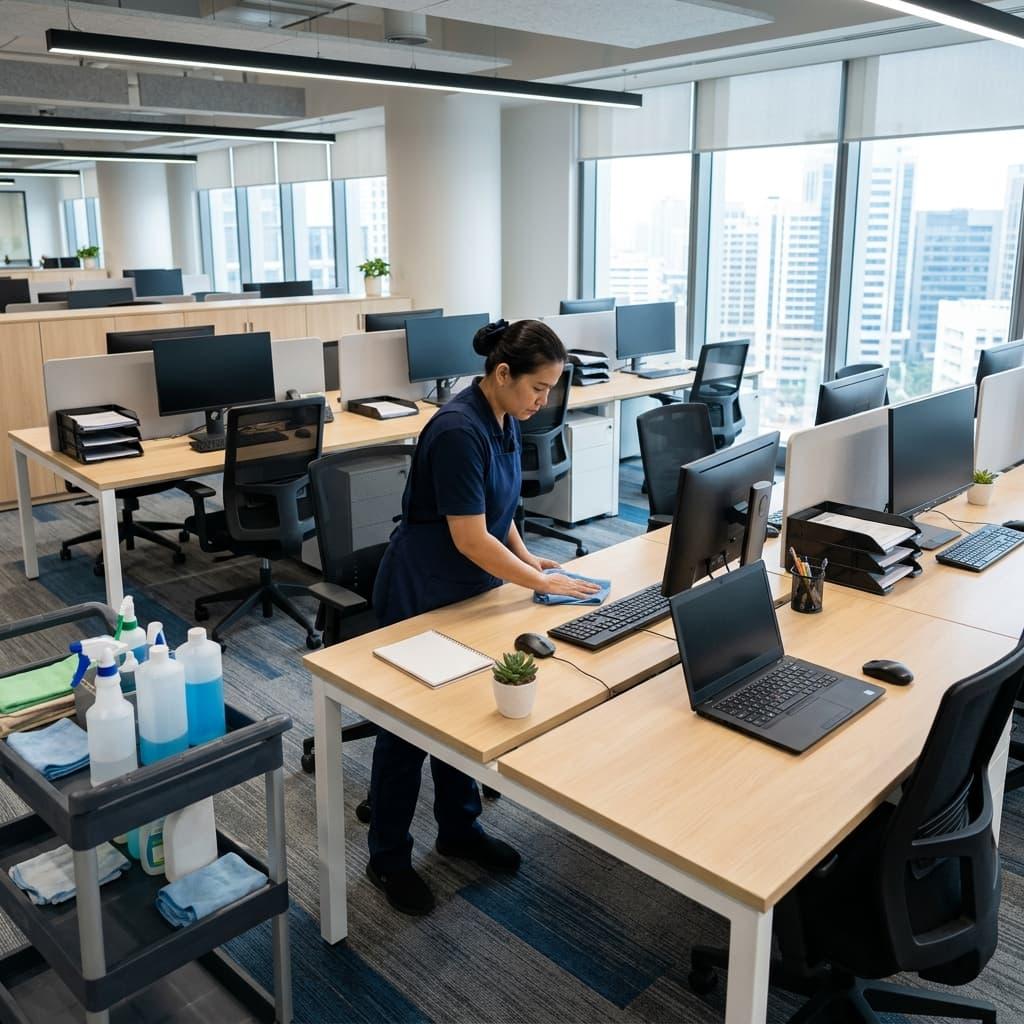
How often should an office be cleaned is one of the first questions an office manager asks when setting up a cleaning contract, and it really depends on how the space is used. A ten person office with its own kitchen needs a different schedule from a busy reception with visitors all day. This guide sets out a practical schedule for offices in Luton, what drives the frequency up or down, and how to turn it into a contract you can hold a cleaning company to.
What the law actually requires
There is no rule that says an office must be cleaned a set number of times a week. What the law does say is that workplaces, furniture and fittings must be kept sufficiently clean, and that waste must not be allowed to build up. That duty sits in the Workplace (Health, Safety and Welfare) Regulations 1992, and the Health and Safety Executive’s workplace guidance explains it in plain terms. In practice, that means the frequency is yours to set, but it has to be enough to keep the space genuinely clean for the way it is used.
How often should an office be cleaned: a working schedule
Most offices in Luton fit comfortably into three tiers of work. The split below is the starting point we use when we scope a new contract, then adjust after walking the site.
Every working day
- Washrooms: toilets, sinks, taps, mirrors, floors and restocking soap and paper
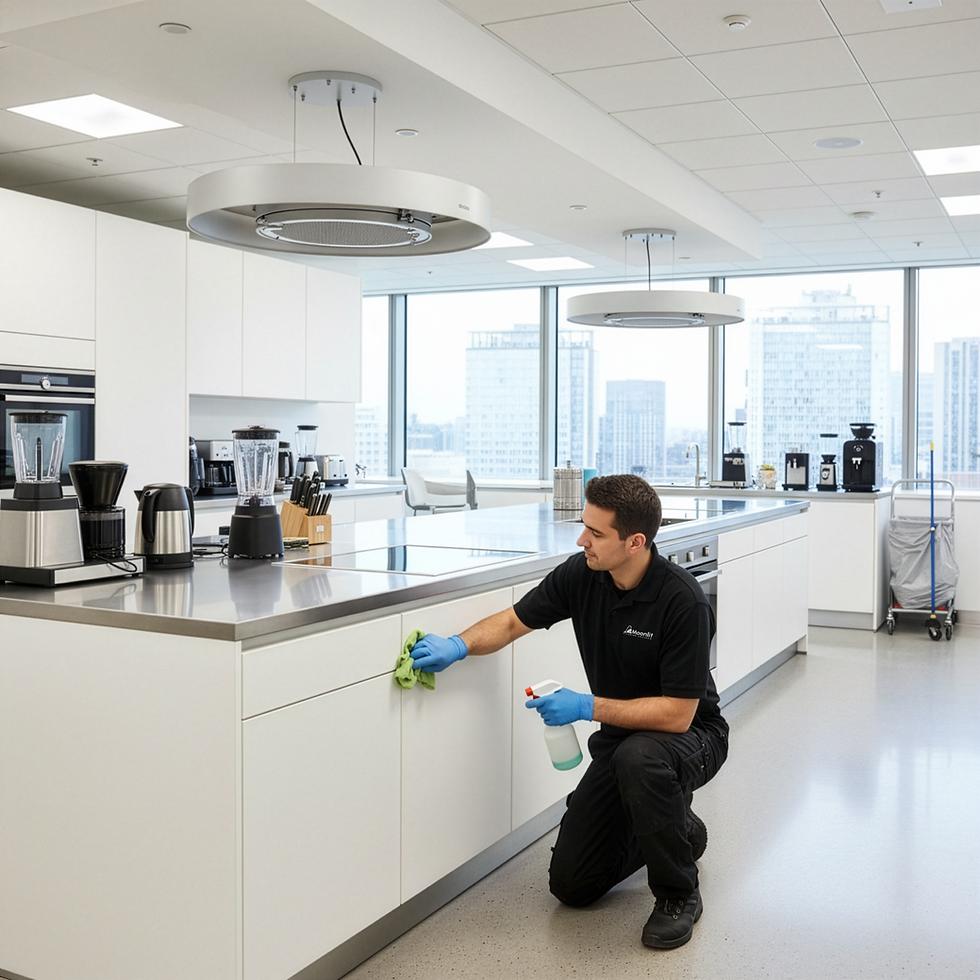
- Kitchens and break areas: worktops, sinks, tables and the outside of shared appliances
- Emptying bins and replacing liners
- Frequently touched points: door handles, light switches, lift buttons and stair rails
- Reception and entrance floors, which carry most of the dirt in from outside
Weekly
- Vacuuming or mopping all general office floors
- Dusting accessible desks, shelves and window sills
- Internal glass and partition doors
- Meeting rooms that are used less often
Monthly to quarterly
- High level dusting, vents and light fittings
- Deep cleaning kitchens, including inside microwaves and fridges
- Carpet cleaning in high traffic routes
- Upholstered chairs and soft furnishings
Our commercial cleaning checklist for Luton offices breaks each area down task by task if you want to hand it straight to a cleaner or compare it against an existing contract.
What pushes the frequency up
Headcount. The number of people using a washroom matters far more than the size of the building. An office that doubles its staff without changing its cleaning schedule will notice it in the washrooms within a week.
Visitors. Offices that see clients, patients or candidates need the reception, meeting rooms and visitor toilets checked more than once a day, because those are the spaces people judge the business by.
Food. A kitchen where staff prepare lunch needs daily attention. An office where people eat at their desks needs desk surfaces added to the daily list.
Season. Winter brings wet floors and more illness. Many Luton offices step up entrance cleaning and touch point cleaning from October to March.
When less is fine
A small office with hybrid working and three or four people on site on any given day rarely needs a cleaner every evening. Two or three visits a week, with washrooms and kitchen covered each time, is often enough. The test is simple: if bins are overflowing or washrooms are running out of supplies between visits, the schedule is too thin.
Turning the schedule into a contract
A frequency means nothing unless the tasks are written down. Ask any provider to attach a specification to the quote that lists the areas, the tasks and how often each happens. It also makes quotes comparable, because two companies quoting for “five evenings a week” can be pricing very different amounts of work. We explain how that affects price in our guide to how much commercial cleaning costs.
Cleaning products also carry their own duties. Your provider should be working to the COSHH regulations for storing and using chemicals on your premises, and should be able to show you how.
Frequently asked questions
Should office cleaning happen during or after working hours?
Most offices prefer early morning or evening cleaning so desks and meeting rooms are free. Washrooms in busy offices often benefit from a short daytime check as well.
How often should office carpets be deep cleaned?
Walkways and entrances usually need it every three to six months. Quieter areas can go longer. Regular vacuuming extends the gap considerably.
Can we start with fewer visits and increase later?
Yes. Starting lean and reviewing after the first month is a sensible way to find the right level without paying for visits you do not need.
Office cleaning in Luton from ST HECS
ST HECS provides office and commercial cleaning in Luton, Dunstable and across Bedfordshire, with vetted staff and a written specification for every site. Contact our Luton team to arrange a walk round and a quote based on how your office is actually used.




Leave a Reply