
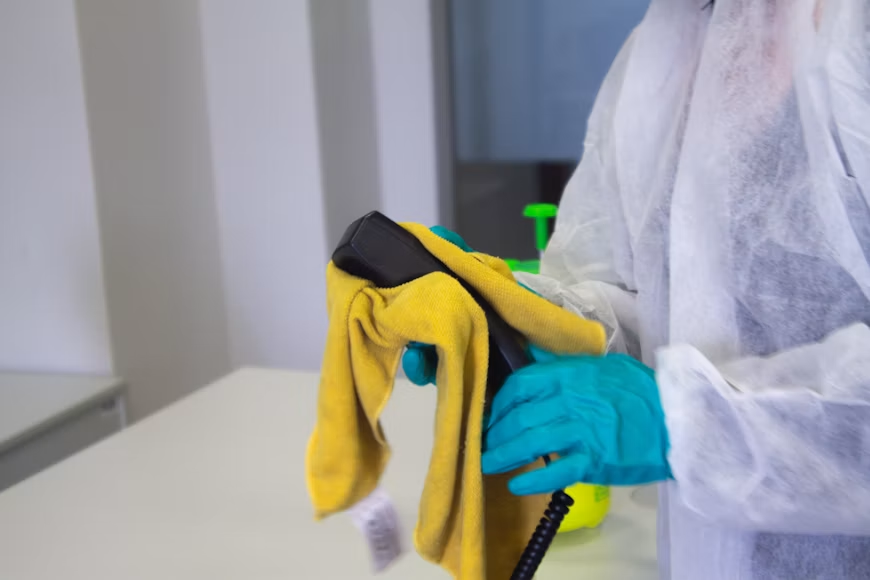
Dental practice cleaning sits in two parts. Clinical decontamination, such as reprocessing instruments and wiping down the dental chair between patients, is done by your trained dental team under your infection control procedures. Environmental cleaning, keeping the rest of the building clean and safe, is often handed to a contract cleaner. Getting the split right, and writing it down, is what keeps standards consistent and keeps the practice ready for inspection. This guide is for practice managers deciding what to ask a cleaning company for.
The standards behind dental practice cleaning
In England, dental practices follow Health Technical Memorandum 01-05, the national guidance on decontamination in primary care dental practices. Among other things, it expects each practice to have a nominated lead for infection control and decontamination. Dental practices are also registered with and inspected by the Care Quality Commission.
Your infection control lead decides the cleaning standards for your practice. A contract cleaner’s job is to follow those standards reliably and record what has been done. A good cleaning company will ask to see your infection control policy and cleaning schedule before it starts, not the other way round.
What usually stays with the dental team
Most practices keep these tasks in house, because they need clinical training and sit within the practice’s decontamination procedures:
- Instrument cleaning, disinfection and sterilisation in the decontamination room
- Cleaning and disinfecting the dental chair, work surfaces and equipment in the treatment zone between patients
- Handling anything contaminated with blood or saliva
- Clinical waste handling, which follows its own separate rules
Your cleaning contract should state clearly that these are not part of the contractor’s role, so nobody assumes someone else has done them.
What a contract cleaner typically covers
The environmental clean is usually done before or after surgery hours, so it does not disrupt patients. A typical specification includes:
- Reception and waiting areas: floors, seating, the reception desk, door handles, light switches and leaflet stands.
- Patient and staff toilets: full clean and restock each visit, with separate equipment that never goes into other areas.
- Surgery floors and non clinical surfaces: floors, skirting, window sills and high surfaces, cleaned once the dental team has finished their end of day decontamination.
- Staff room and kitchen: worktops, sinks, appliances and floors.
- Corridors, stairs and offices: floors, handrails and touch points.
- Periodic tasks: high level dusting, internal glass, deep cleans of floors and upholstered chairs, on a weekly, monthly or quarterly schedule.
Touch points such as door handles, card machines and lift buttons deserve particular attention, because they are handled by every patient.
Colour coding and equipment
Cleaning equipment should be colour coded so that cloths and mops used in toilets are never used in the surgery, reception or kitchen. Ask your contractor to follow the colour coding set out in your infection control policy and to store equipment separately. Mops and cloths should be cleaned or replaced to a schedule, not used until they wear out.
Products and COSHH
Every cleaning product brought into the practice should have a safety data sheet and a COSHH assessment. The contractor should agree with you which disinfectants are used in which areas, so their products do not conflict with those your team uses. Ask for a list of products before the contract starts and keep it with your practice records.
The cleaning schedule and records
Inspectors and your own audits will want to see what was cleaned and when. A clear schedule should show:
- Each area and task
- How often it is done
- Who is responsible: practice team or contractor
- Space for the cleaner to sign and date each visit
Agree how you will check quality, such as a monthly walk round with the contractor’s supervisor, and how problems will be reported and fixed. Our guide to how often an office should be cleaned has more on setting frequencies for non clinical areas.
Choosing a cleaner for your dental practice
When you compare cleaning companies, ask:
- Have their cleaners worked in healthcare settings before, and what infection prevention training have they had?
- Will the same cleaners attend each visit?
- How do they handle keys, alarm codes and lock up?
- What insurance do they hold?
- How do they cover sickness and holidays?
Our article on care home cleaning and infection control covers similar standards in another healthcare setting, and our guide to choosing a commercial cleaning company has more questions to ask.
Dental practice cleaning in Luton and the surrounding towns
We clean clinical and healthcare premises in Luton, Dunstable, Houghton Regis, Leighton Buzzard and Bedford, and across west Hertfordshire. Dental practices on busy high streets usually want the clean done after the last patient leaves, so surgeries, the decontamination room, reception and patient toilets are ready for the first appointment next morning.
Our cleaners are DBS-checked through uCheck before they are placed, and we agree the scope of work with the practice manager in writing. Clinical waste and instrument decontamination stay with your own trained staff; we look after the environmental clean around them.
Dental practice cleaning in Luton and Bedfordshire
ST HECS provides commercial cleaning for workplaces across Luton and Bedfordshire, including healthcare premises. To talk through a cleaning schedule that fits around your surgery hours, see our cleaning services or contact our team.


Leave a Reply