
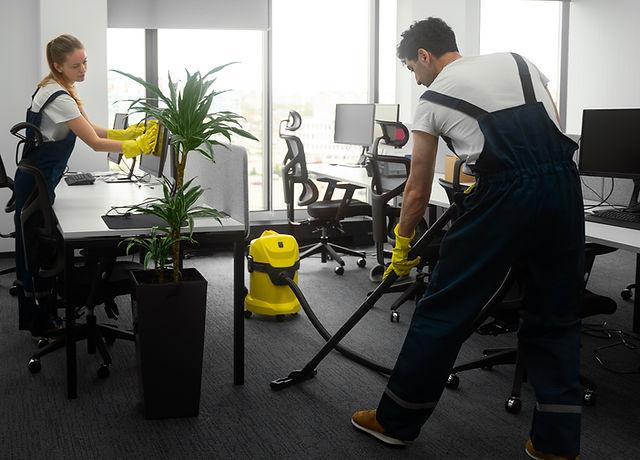
Keeping an office clean is about more than making desks and floors look tidy. A well-maintained workplace can create a better impression for visitors, make employees more comfortable and help businesses maintain a professional working environment.
For office managers, however, cleaning can easily become another task on an already busy list.
There are reception areas to maintain, meeting rooms to prepare, kitchens to keep hygienic and shared spaces that need regular attention. When cleaning is not properly planned, small tasks can quickly become bigger problems.
This commercial cleaning checklist for Luton offices can help office managers identify the areas that should be included in a regular cleaning routine.
Why a Commercial Cleaning Checklist Matters
Every office is different. A small office with ten employees will have different cleaning requirements from a busy workplace with several departments, meeting rooms and shared facilities.
A checklist provides a simple way to make sure important areas are not forgotten.
It can also help office managers communicate expectations to an internal cleaning team or an external cleaning company.
For example, if an office manager notices that meeting rooms are regularly being overlooked, the cleaning checklist can make them a specific part of the routine rather than something that is cleaned only when someone remembers.
A good checklist should therefore reflect the actual needs of the workplace rather than simply being a generic list of cleaning tasks. Office managers should also consider relevant workplace health and safety requirements when setting cleaning standards. The HSE workplace cleaning guidance provides information on workplace cleanliness, hygiene and welfare facilities.
Reception and Entrance Areas
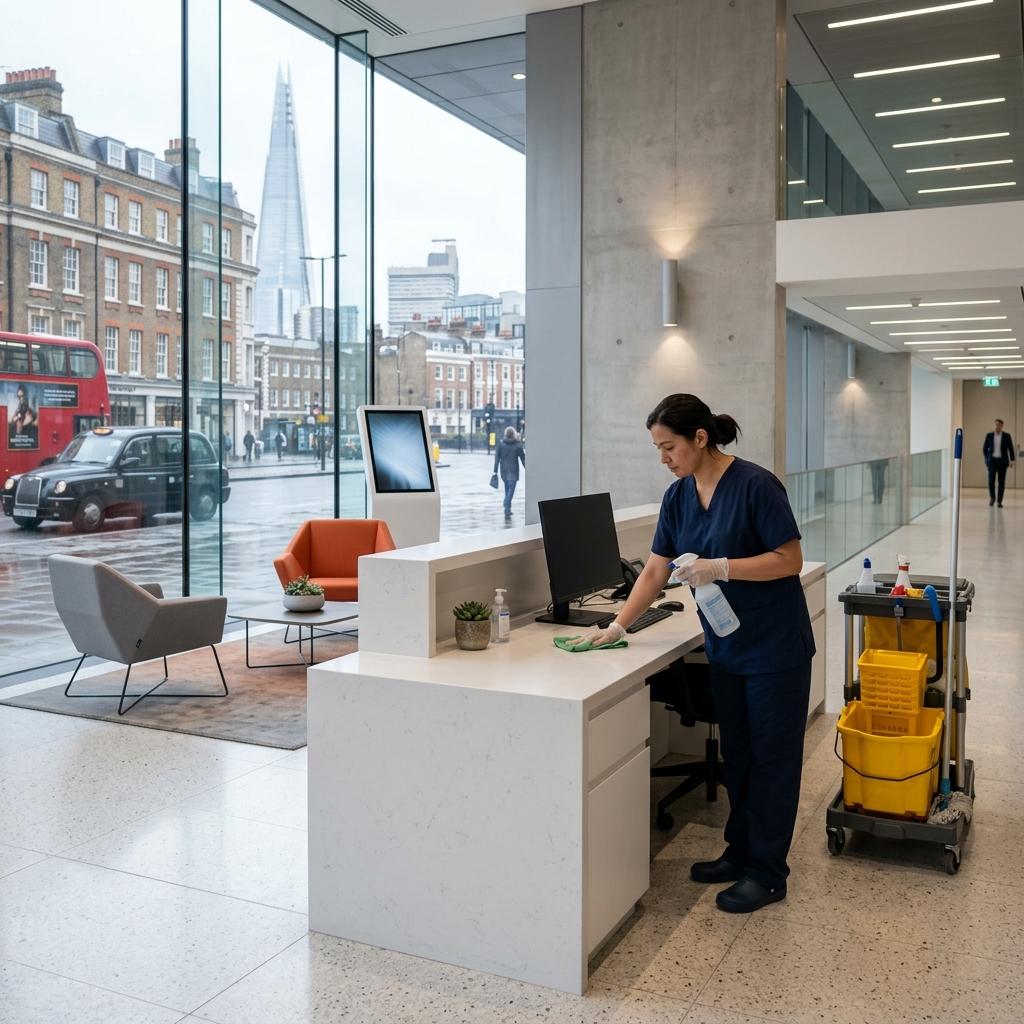
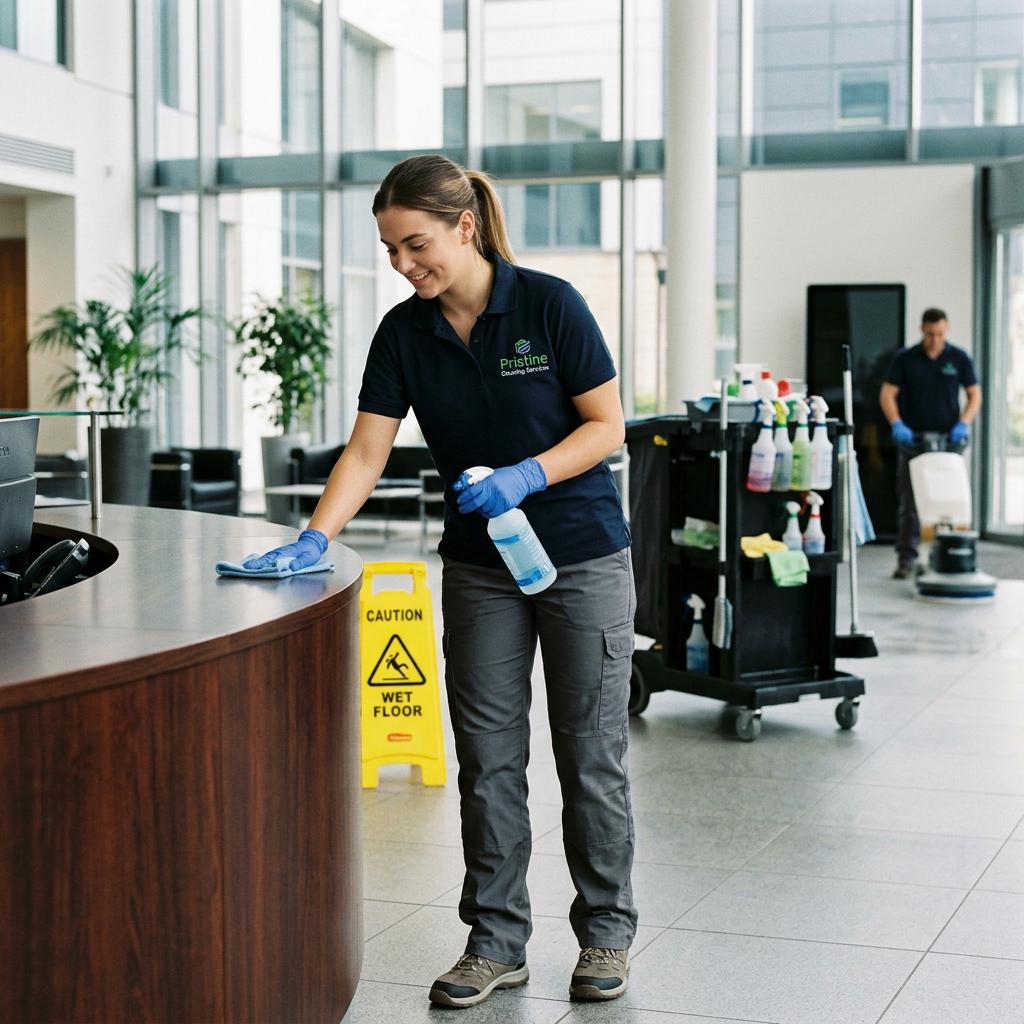
The reception area is often the first part of an office visitors see. For a commercial cleaning checklist for Luton offices, it should therefore be included in every regular cleaning schedule.
Check that:
- Floors are vacuumed, swept or mopped as appropriate.
- Reception desks and surfaces are dust-free.
- Glass doors and visible windows are clean.
- Bins are emptied regularly.
- Chairs and other visitor furniture are clean and presentable.
- Frequently touched surfaces receive appropriate cleaning.
This is particularly important for businesses that regularly welcome clients, suppliers or other visitors.
A clean entrance immediately creates a more organised and professional impression.
Desks and General Office Areas
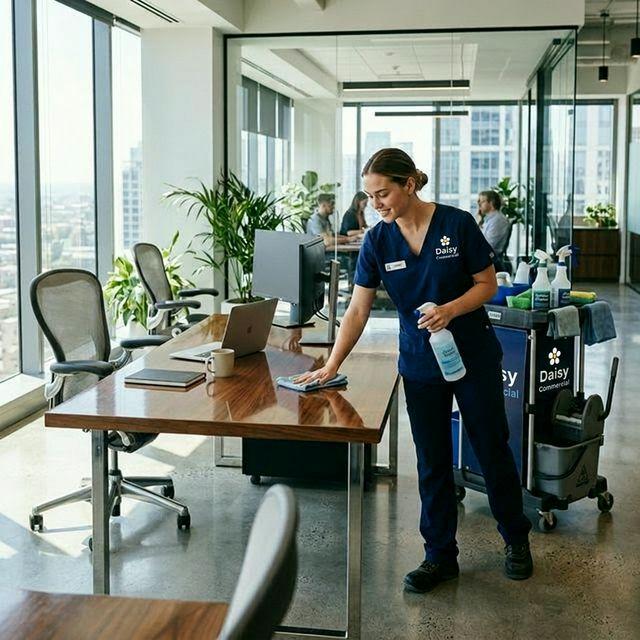
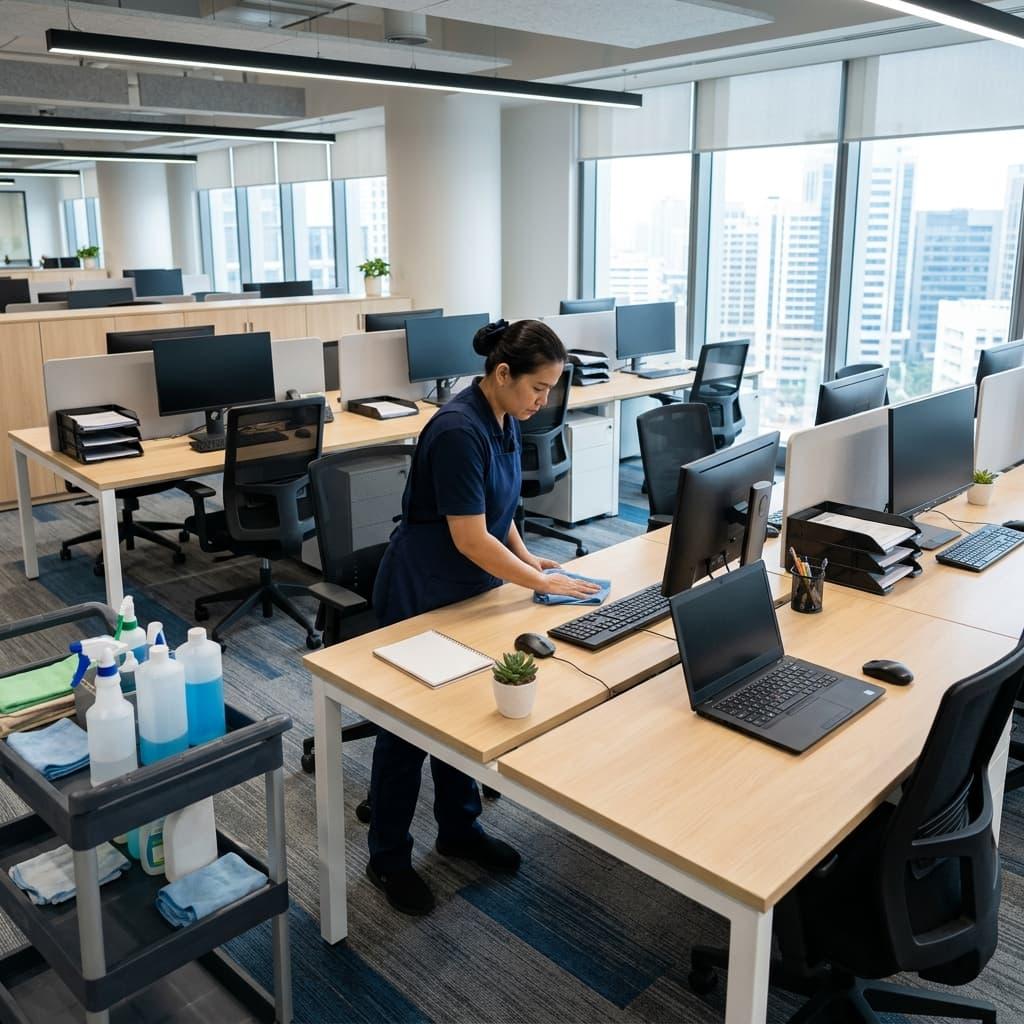
Workstations can collect dust, crumbs and clutter surprisingly quickly, particularly in busy offices.
A commercial cleaning routine should cover accessible surfaces without interfering unnecessarily with employees’ personal belongings or confidential documents.
Include:
- Dusting accessible desks and surfaces.
- Cleaning shared work surfaces.
- Vacuuming carpets or cleaning hard floors.
- Emptying waste bins.
- Removing visible dust from suitable areas.
- Cleaning frequently touched shared equipment and surfaces where appropriate.
Office managers should also communicate clearly about what cleaners are expected to move or clean. This can prevent misunderstandings and protect employees’ personal items and business materials.
Meeting Rooms and Shared Spaces
Meeting rooms can go from spotless to untidy after just one busy day.
After meetings, check for:
- Cups and used refreshments.
- Food waste.
- Marks on tables.
- Full bins.
- Dust on furniture and surfaces.
- Dirty floors.
- Frequently touched surfaces.
For a Luton business that regularly hosts clients, keeping meeting rooms ready for the next appointment can make a noticeable difference.
A simple routine can prevent someone from discovering five minutes before an important meeting that the room has not been cleaned.
Kitchen and Break Areas
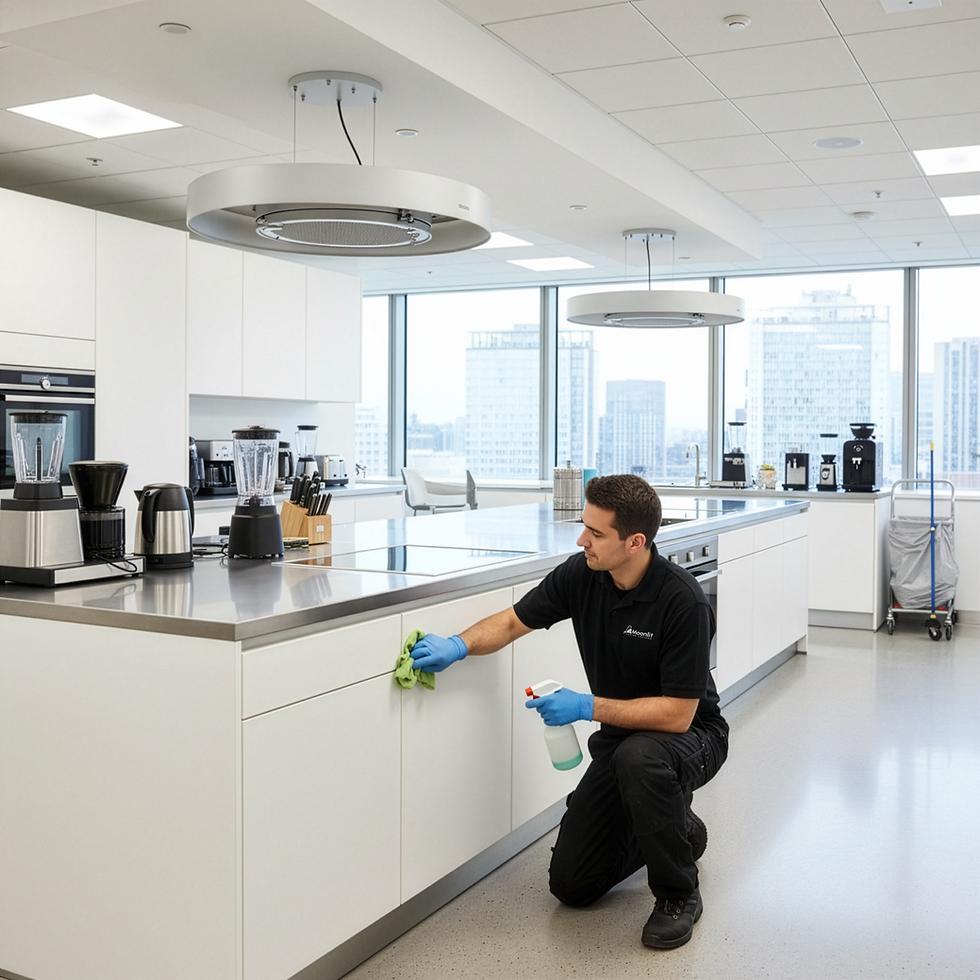
Office kitchens and staff break areas need particular attention because food, drinks and frequent use can create mess quickly.
A regular cleaning schedule should consider:
- Worktops and food preparation surfaces.
- Sinks and taps.
- Tables and chairs.
- Floors.
- Waste bins.
- Handles and other frequently touched surfaces.
- External surfaces of shared appliances where appropriate.
Businesses should also make clear which responsibilities belong to employees and which belong to the cleaning team.
For example, cleaners may be responsible for cleaning surfaces and floors, while employees are expected to remove their own food and personal items.
Clear responsibilities make the cleaning routine much easier to manage.
Toilets and Washroom Facilities
Washrooms should be a key part of any commercial cleaning checklist for Luton offices.
Depending on the size and usage of the workplace, cleaning requirements may need to be scheduled several times throughout the day rather than only once.
The checklist should cover:
- Toilets and surrounding areas.
- Sinks and taps.
- Mirrors.
- Floors.
- Cubicle surfaces.
- Door handles and other frequently touched areas.
- Soap and other essential supplies.
- Waste bins.
Office managers should also have a simple way to report when supplies need replenishing or when an issue requires immediate attention.
High-Touch Areas
Some surfaces receive much more contact than others.
Consider including:
- Door handles.
- Light switches.
- Stair rails.
- Lift buttons.
- Shared equipment.
- Kitchen handles.
- Frequently used cupboard handles.
The exact cleaning approach should depend on the surface and the manufacturer’s guidance for any equipment being cleaned.
The goal is to make these areas part of a planned routine rather than waiting until they visibly look dirty.
Don’t Forget Floors and Windows
Floors are among the first things people notice when entering an office.
The appropriate cleaning method will depend on the flooring material. Carpeted areas may require regular vacuuming, while hard floors may need sweeping and mopping.
Windows and internal glass should also be considered, particularly in reception areas and meeting rooms where marks are highly visible.
For larger offices, cleaning schedules can divide these tasks into daily, weekly and periodic work so the team knows what needs to be done and when.
How Office Managers Can Make Cleaning Easier
One practical approach is to walk through the office as though you were a visitor. For a commercial cleaning checklist for Luton offices, ask yourself: What would you notice first? Would you see marks on the reception glass? Is the meeting room ready for a client? Are bins overflowing? Does the kitchen look properly maintained?
This simple exercise can reveal areas that may be missed during a routine cleaning inspection. It can also help when speaking with a commercial cleaning provider. Instead of simply saying that the office needs to be “cleaned,” an office manager can explain the specific areas and standards that matter most.
For businesses working with a cleaning company, this can make it easier to agree on a clear cleaning schedule and avoid confusion about expectations.
Daily, Weekly and Periodic Cleaning
Not every cleaning task needs to happen every day.
A useful office schedule might divide tasks into:
Daily:
Reception areas, toilets, kitchens, bins, floors and frequently used surfaces.
Weekly:
Detailed dusting, less frequently used areas, internal glass and other tasks based on office usage.
Periodic:
Deep cleaning, carpet cleaning, higher-level dusting and other specialist tasks when required.
The exact schedule should depend on the size of the office, number of employees, foot traffic and type of business.
Keep Your Luton Office Ready for Business
A clean office doesn’t happen by accident. It requires a clear routine, defined responsibilities and regular attention to the areas employees and visitors use most.
Whether you manage a small office or a larger workplace, this commercial cleaning checklist for Luton offices can give you a useful starting point for organising your cleaning requirements.
If managing the cleaning internally is taking too much time, professional support can make the process easier.
FAQs
How often should an office be professionally cleaned?
The ideal frequency for a commercial cleaning checklist for Luton offices depends on the size of the office, number of employees, foot traffic and type of workplace. Many businesses benefit from regular cleaning throughout the week, with deeper cleaning scheduled periodically.
What should be included in commercial office cleaning?
A commercial cleaning service can cover areas such as reception spaces, workstations, meeting rooms, kitchens, washrooms, floors and frequently touched surfaces. The exact cleaning schedule should be based on the needs of the workplace.
How much does office cleaning cost in Luton?
The cost of a commercial cleaning checklist for Luton offices depends on factors such as office size, cleaning frequency, number of facilities and the level of cleaning required. The best way to get an accurate price is to request a quote based on your specific workplace.
Can commercial cleaners work outside office hours?
Yes. Cleaning schedules can often be arranged around the business’s working hours. For a commercial cleaning checklist for Luton offices, evening, early-morning or other suitable arrangements may help minimise disruption to employees and visitors.
Can ST HECS provide office cleaning in Bedfordshire?
Yes. Businesses can contact ST HECS to discuss their office cleaning requirements and request a quote based on their workplace, cleaning needs and preferred schedule.




Leave a Reply